The Second Exposure
The last sun had reached halfway down El Capitan when Jo heard the man beside her wind a camera that clearly had no film in it. She knew that loose, unresisting turn of the lever. She had grown up behind the counter of a camera shop and spent most of her forty years listening to people insist they had loaded things properly.
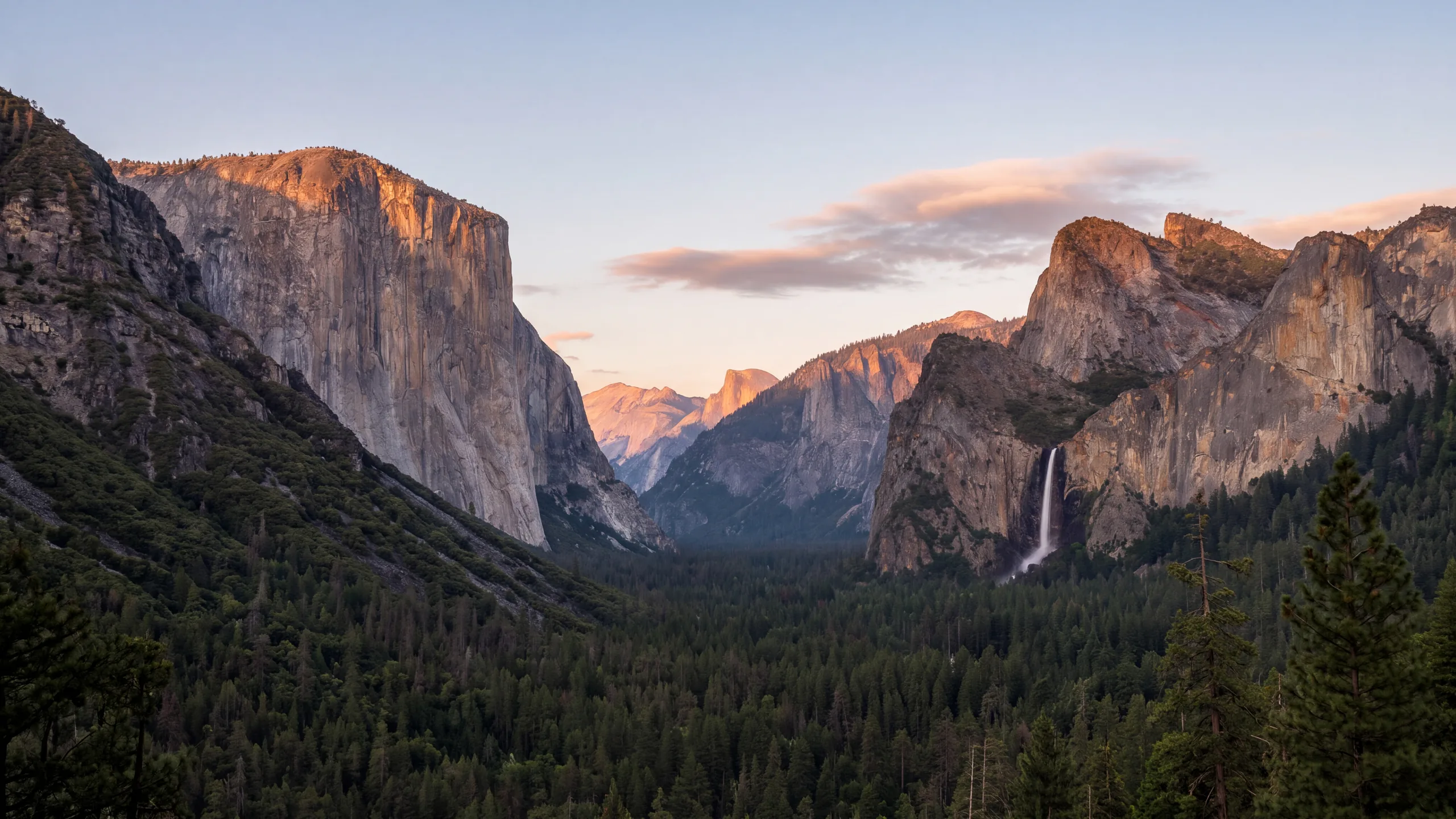
“Would you like a roll?” she asked. She had one in the pocket of her fleece, warm as an egg. From Tunnel View the floor of Yosemite Valley looked almost black with trees. Beyond it the upper granite was the color of the inside of a peach. It seemed a pity for anybody to go home with nothing.
The man lowered the camera. There was a pale ring around one eye where he had pressed it too hard. “That's kind. But this one's full.”
She tipped her head toward the little rewind knob. “Watch that when you wind on.”
He did. The knob stayed perfectly still. He looked at her and then out across the valley. Somewhere behind them a girl was asking her dad how a waterfall could be white in the dark. Bridalveil was still a slender white stroke against rock that had already lost the sun.
“Twenty-seven,” he said at last. “I took twenty-seven pictures on the way here.”
Jo felt dreadful. Even if she could seat the loose leader in the sprockets she could hardly give him back his holiday. At the parapet a sultry woman with sea-green eyes and a wine-red scarf made room for them. Jo put the camera inside her zipped jacket and slipped her hands up from the hem to open its back in the dark.
“Tell me about the best one,” she said while her fingertips found the leader. It had come clean out of the slot.
“An elderly woman in a petrol station eating a boiled egg. She had her own tiny pepper mill. I asked could I take her picture, and she made me wait while she put on lipstick.” He rested his forearms beside hers. “Nobody at home will believe in that pepper mill.”
“I already do.”
His name was Malcolm. He told her about another picture, of a pine tree growing through the chassis of an abandoned truck, and then about a pie so bad that he had photographed it as a warning to posterity. She started to laugh. In his hearing the waitress had called it her honeymoon pie, and he had ordered a second slice because she'd sounded so proud. With the film threaded, Jo wound twice and felt the little wheel turn under her finger.
She gave him the camera. There was time for the rock face, just. He studied the view and then, with evident care, set the camera down.
“Could you stand where you were when you offered me the roll?” he asked. “Only if you'd like to.”
Jo had spent years dodging the lens. Now he was offering her the place in his day occupied by the woman with the pepper mill and the tree that wouldn't give up. She stood where he asked, the spare roll in her open palm. He took one frame. She heard the soft, expensive-sounding click of things working exactly as they should.
As the light withdrew up the great wall, she asked if he wanted her number so he could send her the print. He admitted he wanted it even if the picture came out terribly. She wrote it on the inside of the yellow film carton. Their hands touched, and this time she had no piece of machinery to occupy hers. She turned her palm and his fingers settled into it.
They walked back across the overlook together. The small girl was still there with her father, arguing for the waterfall making its own light. Malcolm glanced at Jo, his mouth twitching. She squeezed his hand. This one they would both remember.