What He Carried
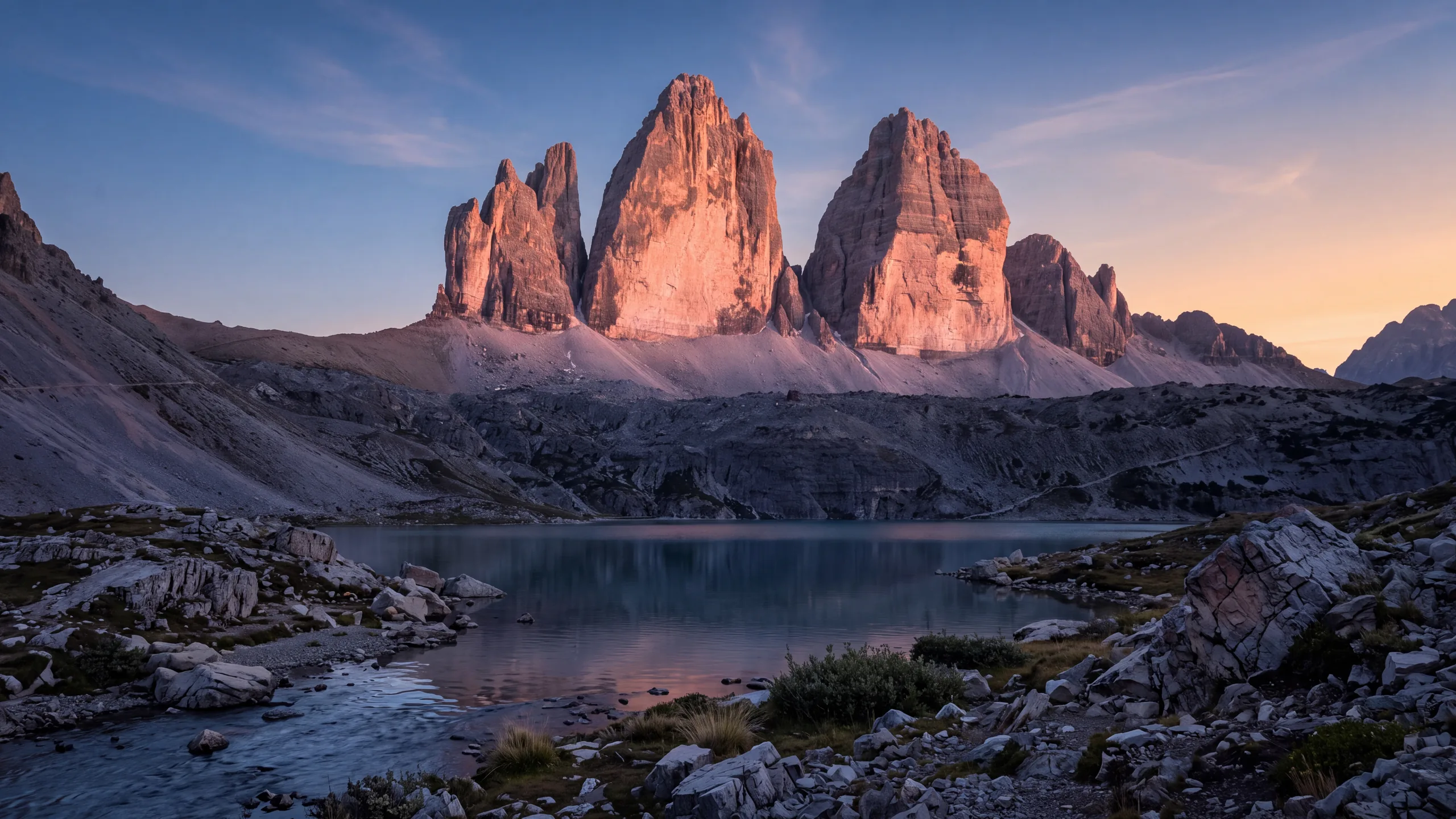
The first sunlight reached the towers while Alma was still catching her breath. Above Base Torres lagoon, three immense walls of granite changed from gray to rose, their reflections trembling in water the wind had briefly left alone. The rocks beside her remained cold enough to sting through her trousers. She had imagined arriving with some splendid thought prepared, something equal to Torres del Paine and the long climb through darkness. Instead, she was thinking that the man beside her had a child's mitten in his pocket, and that he had tried twice to hide it.
They had met the previous afternoon at Chileno, where both had booked the night before joining the same guided ascent. Hugo had shared a table with her and three other walkers, then stayed while she finished her soup. They had talked about the peculiar confidence of people who slept well in tents. He was forty-six, she had learned, and had traveled from England with walking boots older than his passport. Alma, forty-three and from Madrid, had admitted that she had bought hers for this trip and spent months wearing them on increasingly ambitious weekend walks. He had asked which walk had persuaded her she could manage Patagonia. She liked him for assuming there had been one.
There had: a wet afternoon when all her companions turned back and she discovered that she could continue happily, without proving anything to them. This journey was the result. Her younger sister had originally hoped to join her, but a change of plans had left Alma with the choice of postponing or going alone. Until yesterday evening, she had been pleased with going alone. Now she was finding an unexpected pleasure in having someone to look for when their group stopped.
Hugo loosened his pack straps and sat on a dry patch of rock beside her. He smelled faintly of cold wool and the orange he had eaten on the way up. The mitten appeared again, scarcely longer than her thumb, red with a crooked white cuff. He held it against the mountains as though considering a photograph, then lowered it when he noticed her watching. Alma looked away before curiosity became an intrusion. Beside their rock, a silver-haired man with amber eyes and a cobalt-blue scarf tucked a flask into his pack and moved aside for a couple carrying a camera.
Their guide pointed out the light spreading down the towers. Conversation thinned. Alma watched a bright seam widen on the stone until an entire face seemed warmed from within. She had never been anywhere that made her feel so keenly the distance she had traveled. Behind them lay the forest and the tents, beyond those the roads and flights and ordinary rooms where this morning had once seemed unlikely. Hugo made a small sound of pleasure beside her. When she turned, he was smiling without apparently realizing it, and she wanted very much to know what he looked like when that smile was intended for her.
It happened sooner than she expected. She took out a square of chocolate, broke it unevenly, and offered him the larger piece. He examined the division with mock seriousness before exchanging the pieces in her palm. His bare fingers were warm against hers. She could have pulled her hand back at once; instead, she let him finish arranging the chocolate as though the transaction required great care. When their eyes met, neither pretended the exchange had been entirely about food.
She asked whether he had traveled in South America before. This was his first visit, he told her, and his first long holiday by himself in years. His son was grown and away at university; Hugo and the boy's mother had separated amicably long ago. He had become so accustomed to making journeys around another person's school calendar that an open month had seemed almost excessive. Alma understood the hesitation without sharing his circumstances. She had spent years assuming a trip became real only after somebody agreed to join it.
The red cuff showed beneath his hand. She asked about it gently, leaving him room to change the subject. He took the mitten out and rested it on his knee.
His son had worn it on their first camping trip, more than twenty years earlier. Hugo had packed a remarkable quantity of equipment and forgotten the bag containing all the child's warm clothes. They had spent the night at a friend's house instead, with their tent still folded in the car. The following year they tried again. Somehow the single mitten survived every move and clear-out, until his son slipped it into this backpack before Hugo left for Chile.
“He said I was finally allowed another attempt.”
Alma laughed, and Hugo's expression changed with relief. He had wanted a photograph of it here, he explained, but in the face of these mountains the idea had suddenly seemed ridiculous. She thought of the small ways affection traveled when people could not come with you. Then she asked for his phone. He held up the mitten while she framed it against the sunlit towers, his large hand supporting that absurd, beloved scrap of wool. Afterward she took another picture, with his permission, in which the mitten was almost invisible and his happiness was not.
He studied that second photograph for a long moment. Alma felt unexpectedly exposed, as though what she had noticed in him might be legible on the screen. But he only moved closer to show her the light behind his shoulder. Their jackets touched. When he thanked her, his voice was lower than it had been, and she became aware of his mouth, the crease beside it, the nearness she could choose to keep. She turned back to the lagoon before the wanting became too obvious, then smiled at herself because it already was.
The guide gathered them for the descent. On the rough upper section they needed their attention for the trail, but at each pause Hugo found her again. As the path entered the trees, the wind softened and the air smelled of damp earth. The effort of walking together gave their conversation an easy rhythm. She learned that he disliked olives, remembered every dog he had ever known, and had an excellent, uncharitable impression of his older brother. He learned that Alma loved swimming in cold water and was incapable of packing a sensible number of books. The morning grew less extraordinary and, in a way she had not expected, more intimate.
Near Chileno, they stopped with the group where the path widened. Hugo asked about her remaining time in Puerto Natales. She had two nights there before her flight north, and so did he. He suggested spending the following afternoon by the waterfront, then hesitated long enough for her to understand that this was an invitation he cared about. Alma took out her phone and gave him her number, asking him to choose a time. Four o'clock appeared on both their calendars. A concrete arrangement pleased her more than any large promise could have.
When the others moved toward the camp, she stayed beside him a moment longer. He reached for her hand, slowly enough that she could meet him halfway. The touch was firm and wonderfully uncomplicated. Alma moved closer and asked him to kiss her. His smile arrived first; then his free hand settled lightly at her cheek. She felt the warmth of his lips and the brief hesitation before she drew him nearer. They kissed again, lingering this time, with the sound of water moving somewhere below the trees.
At last she rested her forehead against his shoulder and laughed softly at how reluctant she was to let him go. He kept her hand while they walked toward the others. A thread of red wool caught on the zipper of his pocket, and she tucked it carefully inside. There would be a photograph to send home, a mountain morning she had reached on her own, and an afternoon already waiting for the two of them.