The Girl Who Moved
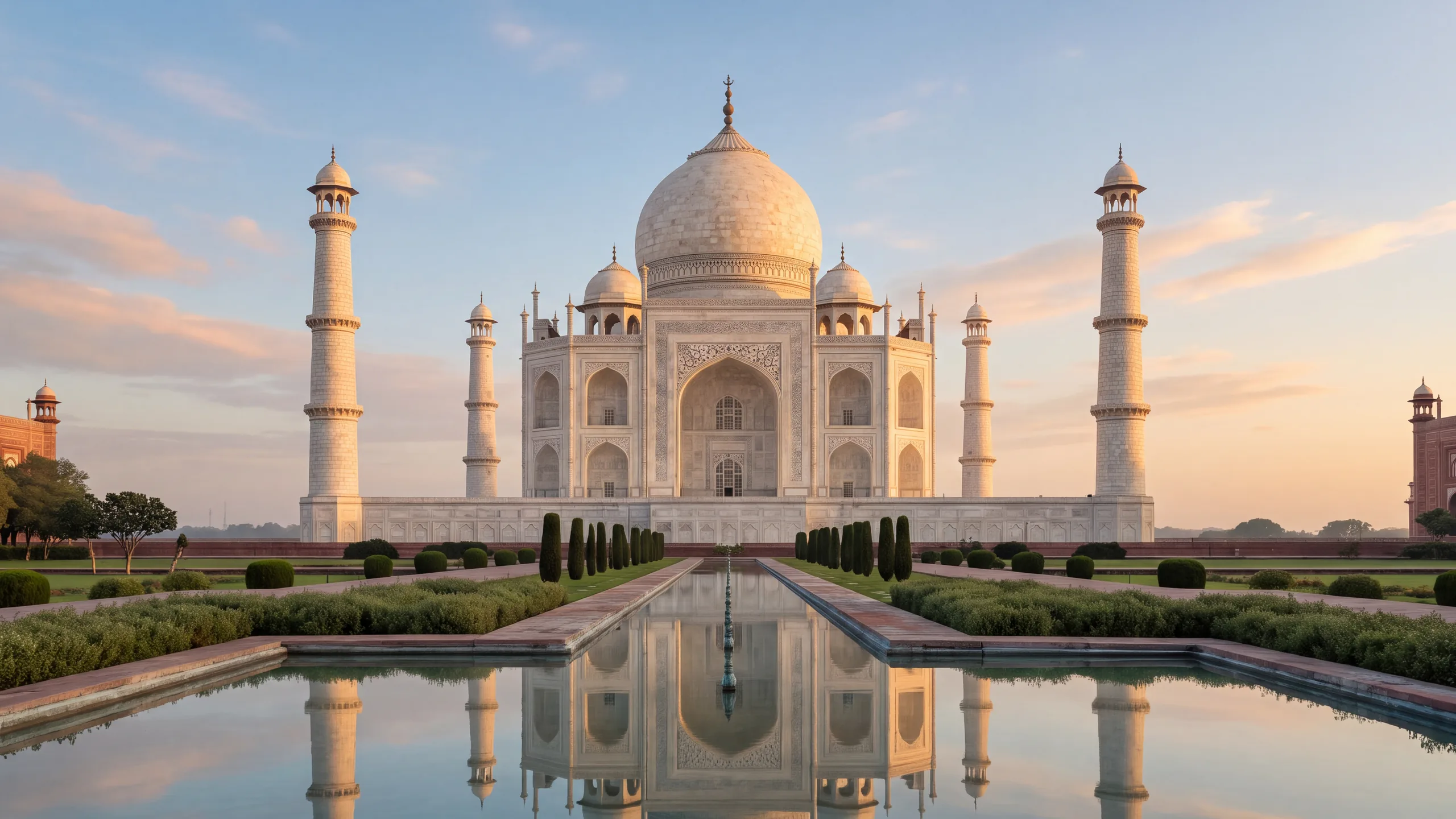
Morning light reached the Taj Mahal from one side, turning the marble above the garden a warm cream while the far faces of the minarets still held a little blue. Salma stood beside the reflecting pool in Agra and tried to put the woman in her photograph where she belonged. She had promised her grandmother a picture of the same view, seventy years on. In the old print a girl with a plait stood beneath the dome. In the new one the dome would have to hang somewhere over the girl's left shoulder. Salma moved three paces and tried again.
“You'll be in the water in another minute.” The man beside her had a dimple in one cheek and the startled expression of someone who had expected to keep his thoughts to himself. She gave him her phone to hold while she retrieved the print from its envelope. It was safer in his hands. Already that morning she had dropped a boarding pass down a stairwell and sent a teaspoon into her aunt's lap. He looked at the photograph, then at her. “She looks as though she's just won an argument.”
Salma laughed. He had caught her grandmother better in five seconds than the newspaper profile written for her ninetieth birthday. His name was Dev. He had come down from Delhi with his sister and his nephews, who had extracted an agreement that they could explore the garden without him for twenty minutes. He had counted on feeling blissfully idle. Instead he found himself enthusiastically directing a stranger two paces back, a little to the right, then forward to precisely where she had started.
The garden filled around them. A silver-haired man with amber eyes and a cobalt-blue scarf stooped to pick up a child's cap. Beyond him the water carried a clear white dome on its surface until a breath of air wrinkled the whole building. Salma took the photograph from Dev. Under his thumb she noticed two pale crescents on the paper. She had seen them all her life and supposed they were dust.
Dev had another idea. With her permission he photographed the print and enlarged it. The crescents had fingernails. Someone was holding up a cutout of the girl in front of the Taj Mahal. Under magnification the rough scissor marks around her plait were unmistakable. Salma called her grandmother. When she finally got through, the explanation arrived between mouthfuls of toast. Her grandmother's brothers had gone to Agra without her. Their father had reckoned the train fare was wasted on an eight-year-old. She had given the eldest a photograph and instructions. Nobody had asked why there were glue stains in the family album.
“Did you ever get here?” Salma asked. Her grandmother said of course. She had taken her own daughters as soon as the youngest could walk. Salma lowered the phone and discovered that Dev, who could only hear her half of the conversation, was waiting with genuine anxiety for the answer.
They made her grandmother two pictures. In one Salma stood beside the pool, a grown woman brought to Agra by a stubborn little girl with scissors. In the other she and Dev leaned together to look at the first. His eldest nephew had taken it. When Dev saw how he was looking at her, the dimple appeared again. Salma liked him particularly for blushing and for asking her out anyway, within earshot of both boys. She could come to Delhi on Sunday, she told him. She put the appointment in his calendar herself.
In the train that afternoon she received the photograph from his nephew. She sent it to her grandmother with their names beneath it. The answer came back almost at once. An excellent likeness, the old woman thought. This time everyone in the picture should stay exactly where they were.