The Envelope He Brought West
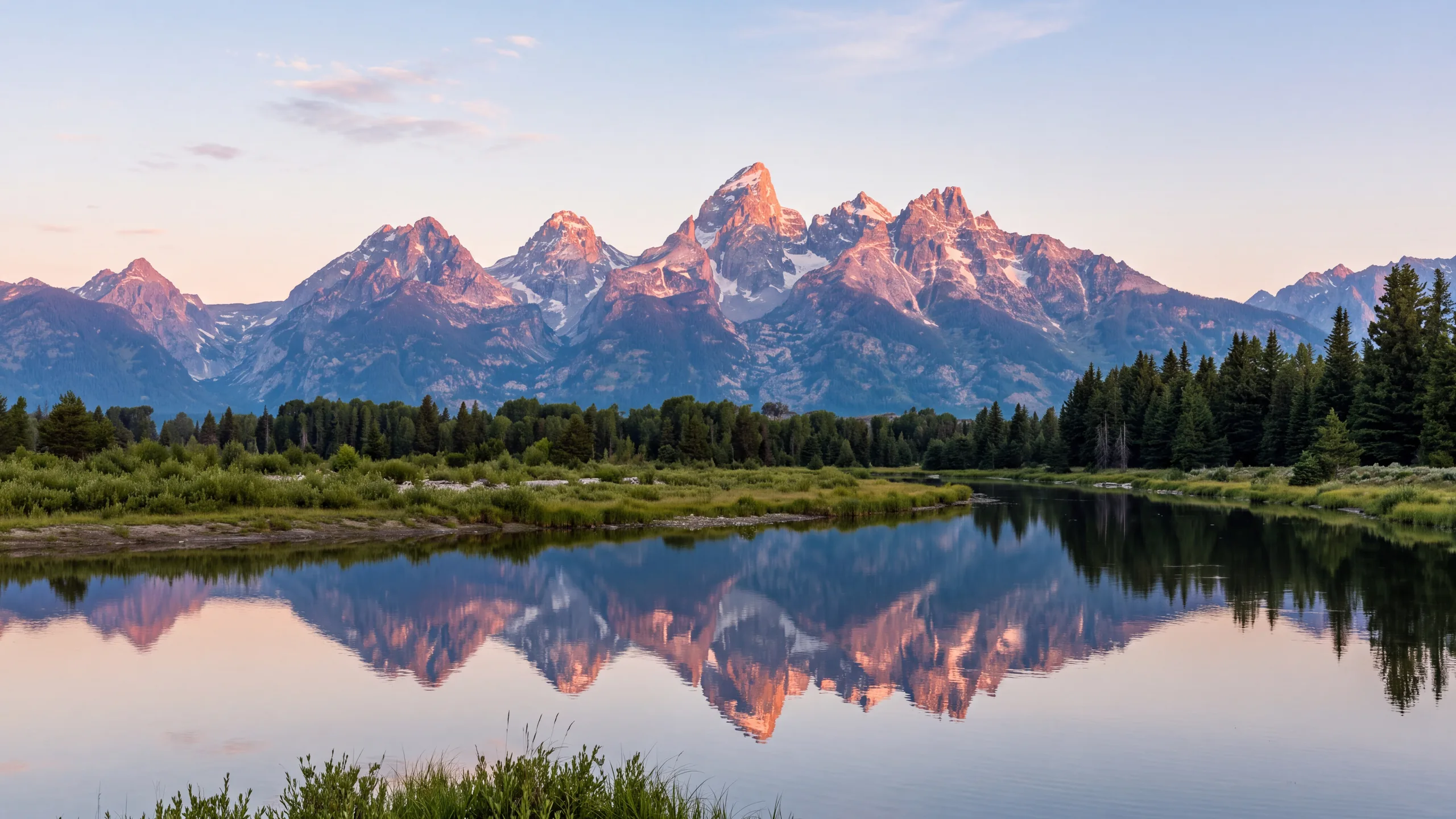
Morning reached Grand Teton from the top down. At Schwabacher Landing, Celia watched a pale band of rose move across the peaks while the river channel beneath them remained dark and perfectly still. The mountains appeared twice, one range sharp against the sky and the other sinking into water. It was the view she had hoped for when she turned off the highway before dawn. What she had not expected was a man standing a few feet away with an envelope in his hands, looking as though he had brought it here to negotiate.
He was not reading it. The envelope was still sealed, soft along its folds, with a row of penciled stars across the back. He turned it over, considered the blank front, and returned it to his coat. Then, almost immediately, he took it out again. Celia tried to keep her attention on the mountains. She had a perfectly serviceable life in which other people's correspondence was none of her business. But the hesitation was so familiar that she felt an unreasonable sympathy for him.
At thirty-eight, she was halfway through a road trip she had once planned with a friend. They had finally admitted that their ideas of a holiday were incompatible: one wanted late nights in cities, the other dawns beside water. The friendship survived the admission, and Celia came west alone. She loved the freedom of it, though each day contained a moment she wished someone else could see. This was already one of those moments, even before the stranger looked up and smiled apologetically, as if he knew his envelope was distracting her.
She asked whether he needed a photograph. It was an acceptable opening, and he seemed grateful for it. He handed over his phone and stood where the path widened, the pale peaks behind his shoulder. Celia took two pictures, then asked him to stop looking as though he were renewing a license. He laughed, and she took a third. In that one his expression opened completely. She noticed the deepening lines at the corners of his eyes, the untidy dark hair above his collar, and the way he looked directly at her afterward instead of immediately examining the screen.
His name was Miles, and he had turned forty that morning. This explained the envelope without explaining it at all. Celia wished him a happy birthday, and he said he was still deciding how to conduct one. Behind them, a silver-haired man with amber eyes and a cobalt-blue scarf paused to wipe his glasses before continuing along the path. Cameras clicked farther down the bank. The first pink faded toward gold, and Miles slipped his phone away without checking the pictures.
They walked a short distance together, keeping to the established path beside the channel. Water caught at grass stems along its edge. Celia had read about the beavers whose dams helped shape this quiet place, but there was no animal in sight, only the evidence of a landscape patiently altered. Miles listened while she described the small differences between mornings she had seen on the trip: one bright and fiercely windy, one almost hidden in rain, this one so still she could hear a zipper being closed behind them. He said she made him wish he had started traveling a week earlier.
When she asked about the envelope, he answered without reluctance now. He had written the contents when he was twelve, for a school exercise about his future. His mother found it while clearing a cupboard and sent it to him with his birthday card, suggesting he open it somewhere nice. Wyoming had already been booked. Bringing it to the mountains seemed an improvement on opening it beside the toaster, but now that he was here he could not quite make himself break the seal.
Celia understood. A child was an exacting person to disappoint. Miles said he remembered being certain he would be famous, though he could no longer remember what for. She admitted that her own younger self had expected a horse, an impractical house, and a talent for speaking several languages without study. His laughter was warm and immediate. While he spoke, she found herself watching the movement of his hands, wondering what it would feel like to have one close around hers.
They stopped at another clear view of the water. Miles confessed that he wanted to decide what he liked about his life before hearing the opinion of a twelve-year-old. Celia suggested they give him a fair hearing afterward. Until then, there was no need to pretend the morning was an examination. She told him what she liked about hers: friends who could disagree and stay friends, a small home full of books, the ability to drive toward something simply because she wanted to see it. He listened with an attention that made the ordinary details feel unexpectedly worth saying aloud.
His own list was equally modest. He liked being the person his younger brother called with good news. He liked his work organizing transport for a college, although he doubted his twelve-year-old self would appreciate the satisfactions of a well-run bus service. He liked swimming and terrible mystery films. After a moment, he added that he liked meeting someone who had persuaded him to smile properly in a photograph. Celia felt the remark settle between them, quiet and unmistakable.
She turned toward him. He was close enough that she could see the lighter brown around his pupils, the careful way he was waiting for her response. She told him she liked taking that photograph. It was a small answer, but it cost her a little courage, and the pleasure in his face made her glad she had offered it. When he reached for her hand, she slid her fingers between his. They remained there for a while, looking at the water, becoming accustomed to how quickly a stranger could stop feeling like one.
At last Miles brought out the envelope. Celia offered to walk ahead and give him privacy, but he asked her to stay. He opened it carefully, preserving the penciled stars. The page inside contained six numbered ambitions. He read them silently before a laugh escaped him, followed by another. The child had wanted to live near a swimming pool, eat pizza whenever he chose, own a telescope, see a mountain bigger than the hill behind school, and be the kind of adult who did not shout when somebody broke something.
The sixth wish was to be married to someone funny. Miles showed her the page, his thumb resting beside the final line. He had managed most of the others, he said. The telescope had never been bought, and the marriage had not happened. Celia looked from the untidy handwriting to the mountains. The child had been kinder than either of them expected. She wanted to say this beautifully, but all that came out was that she thought he would have liked the man standing here.
Miles folded the page and put it away. Then he asked whether she would stay with him a little longer, and Celia said yes before he could turn the invitation into something safer. They arranged to spend the late morning together at another lakeside stop, each following in their own car, with provisions she had already packed. He promised to bring a birthday treat if he could find one. She told him the view was setting an unreasonable standard.
Before they turned back, Celia touched his sleeve and rose slightly toward him. He met her halfway, giving her time to close the last distance. As they kissed, she felt his hand settle at the side of her face and let her own fingers curl into his collar. Neither hurried to end it. When they parted, Miles was smiling, and she remained close enough to feel the quiet laugh that escaped him.
The mountains had brightened to daylight by the time they reached the cars. Miles sent her the photograph she had taken, adding only his name. Celia saved the number, then sent him the place where they would meet. Through her open window she watched him tuck the envelope into the glove compartment with unusual care. Forty had begun, and whatever else it held, they had already decided how to spend the next few hours.